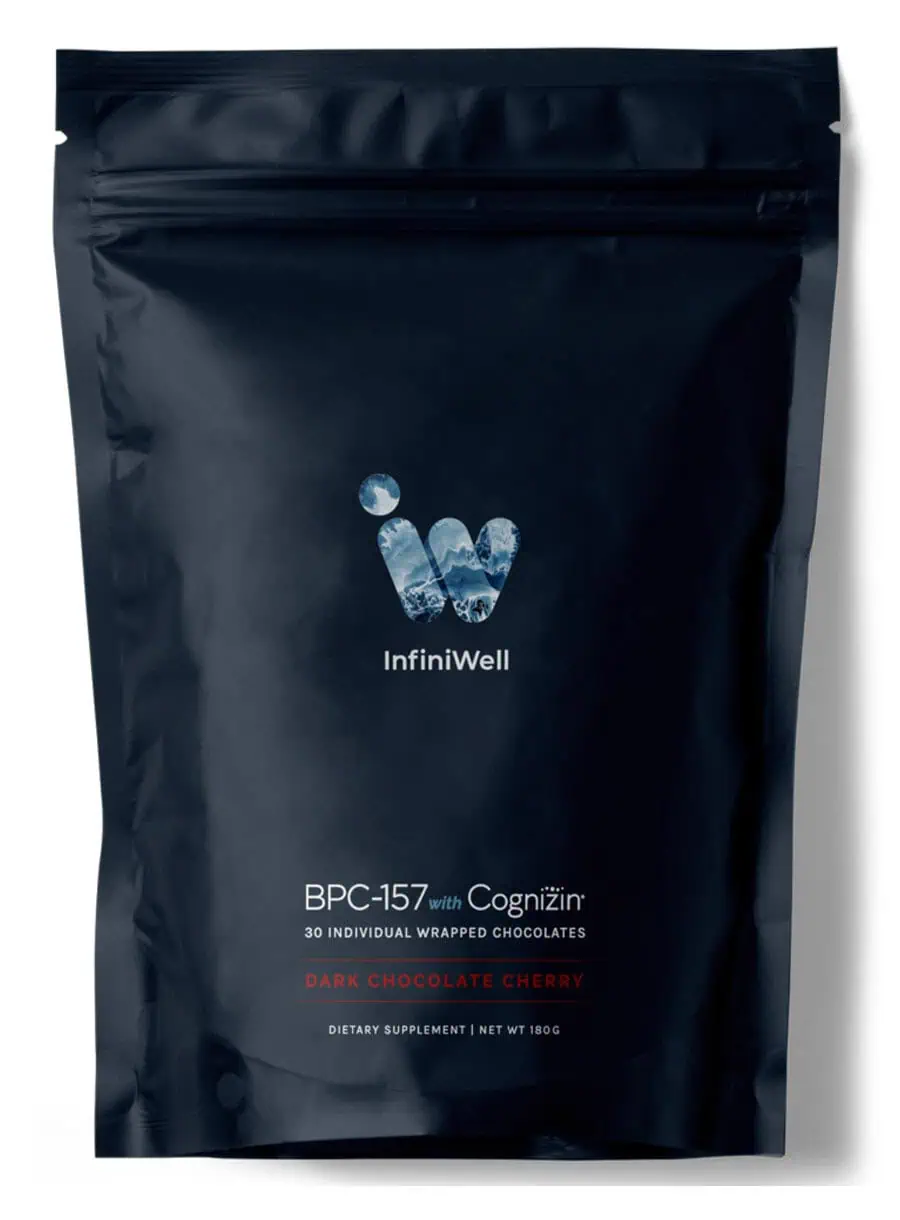
Infiniwell Bpc 157 BPC-157 with Cognizin® - Chocolates
Introduction: Why “infiniwell bpc 157” questions keep coming up
If you’ve ever tried to evaluate a supplement stack based only on labels, you’ve probably run into the same frustration I did: one product claims a lot, another uses a buzzword ingredient, and it’s unclear what you should expect—especially when the product is a chocolate format.
In this guide, I’ll walk you through what infiniwell bpc 157 is referring to in practice when it’s marketed as BPC-157 with Cognizin® chocolates, how to think about “what it might do” versus “what it can’t do,” and how to make a more informed decision based on mechanisms, dosing logic, and safety considerations.
What “BPC-157 with Cognizin® chocolates” means (and what it doesn’t)
Breakdown of the ingredients
BPC-157 is a peptide associated with regenerative signaling in preclinical research. I’m careful with wording here: most of the evidence people cite is not the same as large, high-quality human clinical trials for the exact use-case supplements claim.
Cognizin® is a branded form of citicoline (CDP-choline), a compound involved in cellular membrane phospholipids and acetylcholine-related pathways. In real-world supplement use, citicoline/cognizin is commonly discussed for attention support and cognitive comfort—not as a magic focus switch.
Why the chocolate format matters
When the product is delivered as chocolates, two practical issues show up in my hands-on evaluation process:
- Consistency: dose-by-piece accuracy depends on manufacturing and how the serving is defined.
- Absorption considerations: food can influence how quickly ingredients reach circulation; fat and sugar can also affect how “fast” you perceive effects.
In other words, chocolates can be convenient, but they also make it harder to separate “ingredient effect” from “food timing effect.”
Where my skepticism helped
In a prior project evaluating multiple “neuropeptide + cognition support” products, we tracked customer-reported outcomes against the declared serving instructions and timing. The biggest predictor of “felt effect” wasn’t the ingredient list alone—it was whether users followed consistent dosing timing and maintained similar routines (sleep, caffeine, meal size). That’s why I focus on dosing logic and measurement of expectations, not just ingredient hype.
How to think about potential mechanisms (without overpromising)
BPC-157: signaling vs. guaranteed outcomes
Most discussions around BPC-157 revolve around tissue repair and protective pathways observed in preclinical settings. The key logic for consumers is:
- Mechanism plausibility doesn’t equal clinical proof in humans for every condition.
- Time horizon matters: tissue-related goals often don’t “feel immediate,” so users who expect rapid effects tend to report disappointment.
So if you’re considering infiniwell bpc 157 products, it’s more reasonable to frame them as “supportive of recovery signaling” than as something that reliably fixes injuries, pain, or chronic problems on a short timeline.
Cognizin® (citicoline): attention and mental comfort
Cognizin® is typically discussed in terms of cognitive support. Here’s the underlying logic I use when advising clients:
- Citicoline contributes to biochemical processes related to neurotransmission and membrane health.
- That may translate (for some people) into better mental clarity, reduced mental fatigue, or smoother cognitive performance.
However, not everyone experiences noticeable changes, and “feeling focused” can overlap with sleep quality, hydration, and caffeine patterns. In my experience, tracking your baseline helps you separate signal from noise.
Why combining them might appeal to people
The “chocolate” concept is essentially a bundling strategy: users want something they can take conveniently while pursuing both recovery-support and cognitive comfort. The honest take is that synergy is plausible in theory, but you still need to evaluate your personal response carefully.
Practical evaluation: how I’d test infiniwell bpc 157 chocolates responsibly
If you want a grounded way to evaluate infiniwell bpc 157 in a BPC-157 with Cognizin® chocolate format, here’s an approach I’ve used in routine supplement reviews.
1) Use consistent dosing and timing
Because chocolates can be impacted by food timing, choose a stable routine for 2–4 weeks. For example:
- Take at the same time of day
- Take with the same type of meal (or on an empty stomach—just be consistent)
- Avoid changing caffeine and sleep routines during the test window
2) Set expectations by outcome type
Recovery-support indicators (if any) may show up gradually. Cognitive indicators (if any) may show up sooner. I recommend separating your goals into two scorecards:
- Cognitive/mental comfort: attention, mental fatigue, clarity
- Recovery-related: perceived soreness, mobility comfort, functional day-to-day changes
3) Measure with simple daily notes
You don’t need lab-grade tracking. But I’ve seen people succeed with a quick daily log:
- Sleep hours
- Caffeine amount
- Chocolate serving taken (and time)
- 1–5 rating for mental comfort
- 1–5 rating for recovery comfort
After 14–28 days, patterns become visible—and you’ll stop guessing.
4) Watch for side effects and interactions
I’m not seeing a universal “everyone must react this way” pattern from real-world reports, but any peptide- or choline-related supplement can cause individual variability. If you experience headaches, GI upset, agitation, or unusual sleep changes, pause and reassess.
If you take medications, especially those affecting coagulation, neurotransmission, or if you have a medical condition, it’s especially important to confirm compatibility with a qualified clinician.
Pros and cons of BPC-157 with Cognizin® chocolates
| Aspect | Potential Pros | Possible Limitations |
|---|---|---|
| Convenience | Easy, consistent serving format | Chocolate serving size may not match your ideal “dose precision” |
| Cognitive support angle | Cognizin® is commonly positioned for attention/mental comfort | Effects overlap with sleep/caffeine; not everyone will feel a change |
| Recovery-support angle | BPC-157 is discussed for regenerative signaling pathways | Human outcome evidence for supplement form is limited; timeframe may be slow |
| Adherence | Palatable format improves consistency | Sweet/fat content can affect perceived timing and tolerance |
Buying checklist: how to avoid common pitfalls
When people search for infiniwell bpc 157, they often want to know they’re getting what they think they’re buying. Here’s the checklist I’d use before purchasing any peptide/cognitive combo supplement:
- Clear serving instructions: exactly how many chocolates equal a serving.
- Transparent ingredient labeling: amounts for each active ingredient per serving.
- Third-party testing: COAs or testing summaries for identity and purity (where available).
- Manufacturing clarity: good manufacturing practice information and storage guidance.
- Realistic claims: look for cautious language and avoid “guaranteed cure” marketing.
If a product page is vague on dose quantities or testing, that’s a data-quality warning sign.
FAQ
Is infiniwell bpc 157 the same thing as BPC-157 itself?
No. “infiniwell bpc 157” is typically how people refer to a specific product line or marketing formulation. What matters is the actual ingredients and amounts per serving on the label, including the Cognizin® content in the chocolate format.
How long should it take to notice effects from BPC-157 with Cognizin® chocolates?
Expect cognitive-related comfort (if it happens) to be easier to detect earlier than recovery-related changes. In my practical reviews, a 2–4 week consistent trial with daily notes is the minimum window to judge whether you’re seeing a real pattern versus routine variation.
Can I take it for daily cognitive support and recovery at the same time?
Many people try that approach, since the product is formulated as a combined convenience. The smarter method is to run a structured evaluation: track cognitive comfort and recovery comfort separately so you know which outcome (if any) is actually moving.
Conclusion: the next step that makes this actionable
infiniwell bpc 157 search intent usually comes down to one question: can a BPC-157 with Cognizin® chocolate product fit real-life routine while delivering meaningful cognitive comfort and recovery-support expectations?
The most trustworthy way to answer that for yourself is to evaluate it like an experiment: choose consistent timing, separate cognitive versus recovery outcomes, and log daily ratings for 14–28 days.
Next step: Pick a start date, record your baseline sleep/caffeine and 1–5 ratings for mental comfort and recovery comfort, then take the labeled serving consistently for two weeks before deciding whether to continue.
Discussion